Table of Contents
A Language That Has Outlasted Empires
Yucatec Maya is a living language with deep roots in the history of the Yucatán Peninsula. It belongs to the Maya language family and is still spoken by hundreds of thousands of people today.
The language is closely connected to a much larger intellectual tradition. Maya scholars developed sophisticated systems for tracking the movements of the Sun, Moon, and Venus, as well as complex calendar systems.
This knowledge was recorded in inscriptions, manuscripts, and other forms of Maya writing. These traditions preserved information about astronomy, religion, politics, and everyday life.
Today, Maya is not simply a language of the ancient world. It is spoken in homes, communities, schools, media, and cultural settings across the Yucatán Peninsula.
The 2020 Mexican census recorded 774,755 Maya speakers aged three and over.
Where Is Yucatec Maya Spoken?
The main area where Yucatec Maya is spoken is the Mexican Yucatán Peninsula, particularly the states of Yucatán, Quintana Roo, and Campeche. The language is also spoken by Maya communities in neighboring parts of Belize and Guatemala.
Within Mexico, Yucatec Maya has a particularly strong presence outside the largest urban and tourist centers. In many communities, it remains part of everyday family and community life.
The linguistic landscape can vary considerably from one place to another. Spanish and Yucatec Maya are often used side by side, with speakers choosing between them depending on the situation.
You may hear Maya in conversations at home, in local markets, during cultural events, and in community settings. In other situations, particularly in formal institutions, Spanish may be more common.
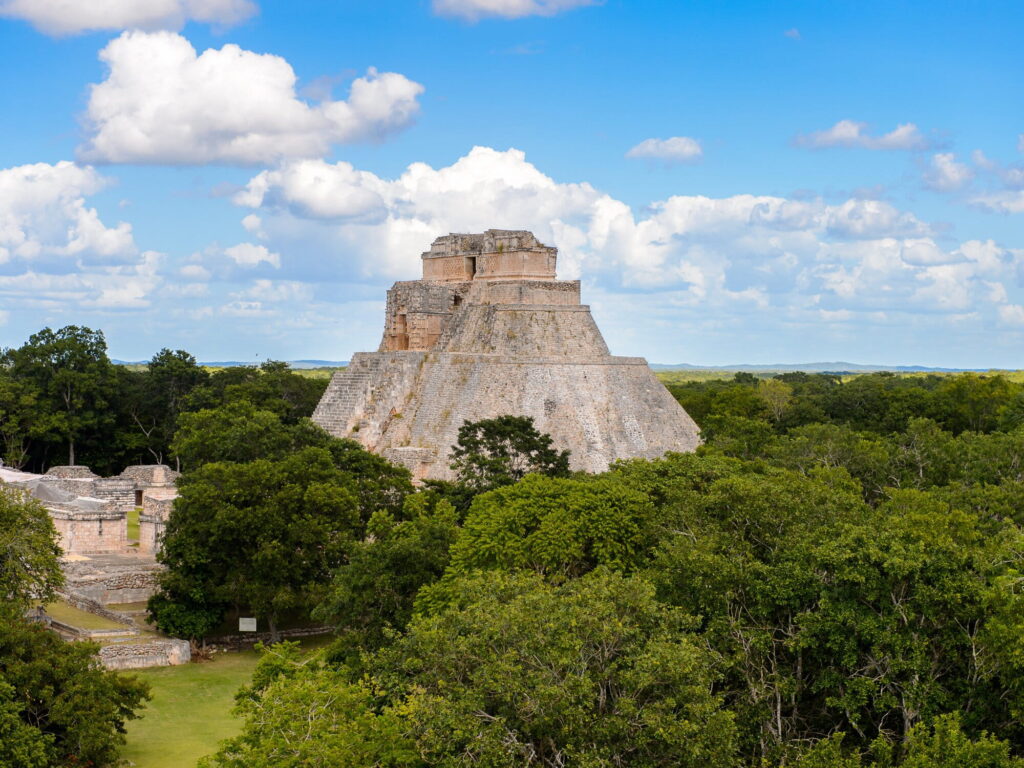
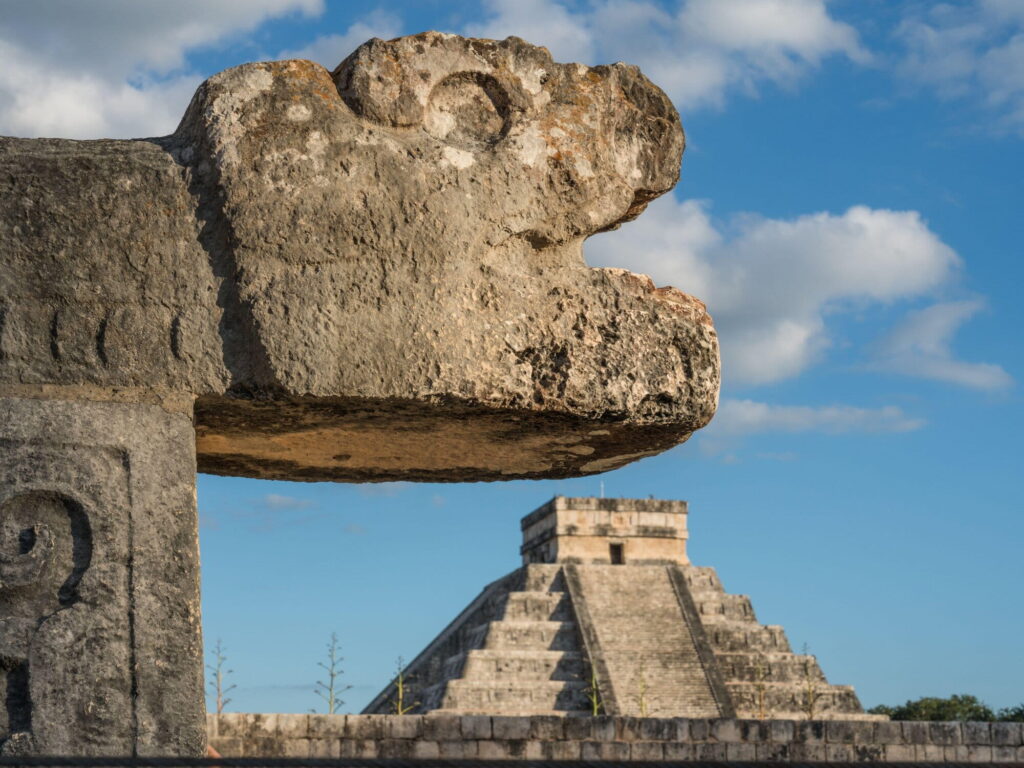
This creates an interesting contrast across the peninsula. Millions of visitors come to see places such as Chichén Itzá and Uxmal, while nearby communities continue to use the language connected to the region’s long Maya history.
How Yucatec Maya Sounds and Works
Yucatec Maya has several distinctive linguistic features that make it quite different from English and Spanish. Some of them can be unfamiliar to new learners, but they also give the language its characteristic sound and grammatical structure.
Here are four features worth knowing:
- Glottal stops: Yucatec Maya uses glottal stops, which are brief interruptions in the flow of air. They can distinguish between words and are represented in writing with an apostrophe.
- Ergative-absolutive grammar: The language organizes certain grammatical relationships differently from English and Spanish. In particular, it distinguishes between the agent of an action and the person or thing affected by it.
- Aspect: Yucatec Maya pays important attention to how an action unfolds, such as whether it is completed, ongoing, or repeated. This means that aspect plays a major role in the grammar.
- Distinctive consonants: Sounds such as ts, ch, x, and glottalized consonants contribute to the characteristic sound of Yucatec Maya and can take some practice for new learners.
These features give Yucatec Maya its own sound and grammatical system. The language also has a long history of contact with Spanish, which has influenced vocabulary and language use in the region. Want to hear what Yucatec Maya sounds like? In the following video you can listen to a native speaker:
The Hieroglyphs and the Written Maya Tradition
Maya writing is one of the most remarkable writing traditions to develop in the ancient Americas. Maya inscriptions were carved into monuments, painted on ceramics, and recorded in books known as codices.
The writing system combined signs representing whole words with signs representing syllables. This allowed ancient Maya scribes to record a wide range of information in considerable detail.
For centuries, much of the script could not be understood by researchers. Major advances in decipherment during the 20th century eventually revealed that the inscriptions contained much more than calendar information.
The surviving Maya texts record political events, rulers, religious ideas, mythology, astronomy, and aspects of everyday life. They provide an unusually detailed view of Maya civilization before and during the period of European contact.
Only a small number of Maya codices survived the destruction and loss of manuscripts during the colonial period. The Dresden Codex is particularly famous and is held today by the Saxon State and University Library in Dresden, Germany.
The codex contains important information about Maya astronomy and calendar systems. Its presence in Europe is also a reminder of the complex history through which surviving Maya manuscripts reached modern collections.
Useful Yucatec Maya Phrases
Everyday Yucatec Maya phrases are a simple way to get a first impression of the language. Even a few expressions can help you become familiar with its sounds and spelling.
- Bix a beel? – How are you?
- Ma’alob. – Good / I am fine.
- Dios bo’otik. – Thank you.
- Tak to’on. – Goodbye.
- Bix a k’aaba’? – What is your name?
- In k’aaba’e… – My name is…
Pronunciation matters in Yucatec Maya, particularly because the apostrophe can represent a glottal stop rather than ordinary punctuation. Once you become familiar with these sounds, the written forms become easier to recognize.
Colonization, Resistance, and Survival
The history of Yucatec Maya is closely connected to the history of colonization in the Yucatán Peninsula. Spanish attempts to conquer and control Maya territories took place over a long period, and resistance continued well beyond the initial conquest.
Maya communities maintained their language and cultural traditions despite major political and social changes. Language remained part of everyday community life rather than disappearing after Spanish colonial rule was established.
One of the most important later conflicts was the Caste War of Yucatán, which began in 1847 and continued in different forms for decades. Maya communities in the eastern and southern parts of the peninsula resisted the Mexican state and the economic and political structures imposed on them.
Yucatec Maya was an important part of communication within these communities. The language therefore remained closely connected to community identity during a period of major political and social upheaval.
Yucatec Maya Today
Yucatec Maya today remains an important part of cultural and community life across the peninsula. In Mexico, government institutions have also developed programs aimed at supporting indigenous languages and bilingual education.
The Instituto Nacional de Lenguas Indígenas, or INALI, was established in 2003 and plays a role in Mexico’s national language policy and the documentation and promotion of indigenous languages.
At the same time, the future of the Maya language depends on more than official programs. Families, schools, community organizations, writers, musicians, and other speakers all play a role in passing the language on to younger generations.
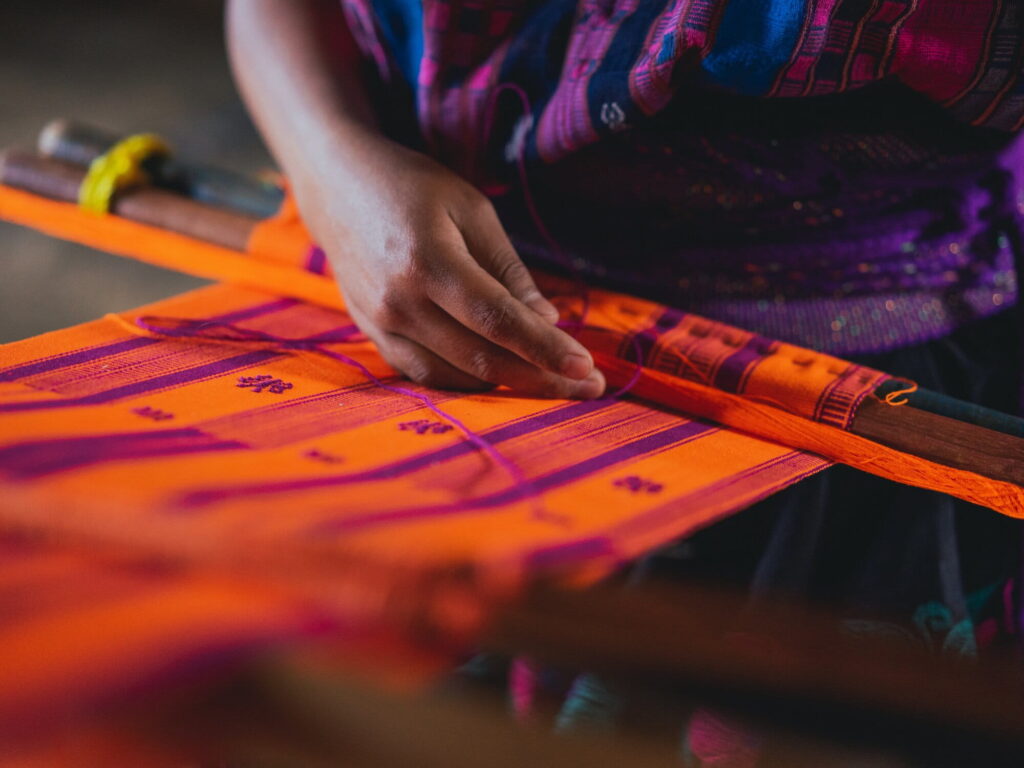
Maya can be found in radio, music, literature, theater, educational projects, and online content. These modern uses give speakers opportunities to use the language in contexts that go far beyond traditional village life.
Tourism has also created a complicated relationship with the language. Visitors come to famous archaeological sites such as Chichén Itzá, Uxmal, and Cobá, while Maya communities continue to live and speak their language in the surrounding region.
The connection between ancient Maya civilization and living Maya communities is important, but the two should not be treated as if they were the same thing. Today’s Maya speakers are part of contemporary society, with their own experiences, challenges, and forms of cultural expression.
Ready to Learn Yucatec Maya?
Learning Yucatec Maya gives you an opportunity to explore both a fascinating language and the contemporary culture of the Yucatán Peninsula. You do not need to start by learning the entire grammatical system.
A good starting point is to learn simple expressions, become familiar with pronunciation, and gradually recognize common grammatical patterns. Listening to native speakers can also help you understand sounds that may be unfamiliar if you speak a European language.
It is also useful to remember that Yucatec Maya is a living language. It is not simply a way of accessing the ancient Maya world.
People still use it to talk with family members, communicate in their communities, create music and literature, and share information. Learning the language therefore means engaging with both its history and its present-day speakers.
Conclusion
Yucatec Maya connects past and present in a way that few languages can. Its history is linked to one of the most sophisticated intellectual and cultural traditions of ancient Mesoamerica, including remarkable achievements in writing, mathematics, calendars, and astronomy.
But the language itself did not disappear with the end of the Classic Maya period. It continues to be spoken today by hundreds of thousands of people, particularly in Yucatán, Quintana Roo, and Campeche.
The history of colonization, resistance, and social change has shaped the language and the communities that use it. At the same time, modern Maya speakers continue to use the language in homes, schools, cultural projects, media, and online spaces.
That makes Yucatec Maya much more than a link to the past. It is a living language with its own grammar, sounds, history, and place in contemporary life.
Frequently Asked Questions About Yucatec Maya
Is Yucatec Maya still spoken today?
Yucatec Maya is still widely spoken today, particularly in Mexico’s Yucatán Peninsula. The 2020 Mexican census recorded 774,755 people aged three and over who spoke Maya. The largest concentrations were in Yucatán, Quintana Roo, and Campeche. Many speakers also use Spanish, so bilingualism is common in the region. The language is used in homes and communities as well as in cultural, educational, and media settings.
Is Yucatec Maya the same as the language spoken by the ancient Maya?
Modern Yucatec Maya has a direct historical connection to the ancient Maya languages, but it would be misleading to treat them as exactly the same language. The ancient Maya world included many related languages, and the writing found on monuments recorded several languages or varieties. Yucatec Maya developed over a long period and has continued to change through contact with other languages, especially Spanish. Today’s speakers therefore use a modern language with a deep historical connection to the Maya civilizations of the past.
Is Yucatec Maya difficult to learn?
Learning Yucatec Maya can be challenging for English or Spanish speakers, mainly because its sounds and grammatical structures are quite different from those languages. Glottal stops, ergative-absolutive grammar, and the importance of aspect may take some time to understand. However, you do not need to learn everything at once. Starting with everyday phrases and pronunciation can give you a practical foundation before you move on to more complex grammar.
Where is Yucatec Maya spoken?
Yucatec Maya is mainly spoken on Mexico’s Yucatán Peninsula, especially in the states of Yucatán, Quintana Roo, and Campeche. Maya-speaking communities can also be found in neighboring parts of Belize and Guatemala. Within the peninsula, language use varies from community to community. Spanish is widespread, and many people use both languages depending on the setting. This means that Yucatec Maya is part of a multilingual region rather than existing separately from Spanish.