Maybe you know this situation, too. You’re talking to someone you don’t know very well, and at some point they ask, “So, what do you do in your spare time?” You tell them that you enjoy learning languages. So far, so normal. But then you mention that you’re particularly interested in indigenous languages such as Náhuatl or Maya – and suddenly you’re met with a questioning look.
It can almost feel as though you’ve just told someone that you saw a mammoth or a sabre-toothed tiger.
Extinct. History.
Before I discovered indigenous languages, I honestly hadn’t given the subject much thought either. Here in Europe, many of us have little or no direct contact with indigenous languages and cultures. Unless we travel to places where they are spoken, we may encounter them only occasionally – and usually only if we are already interested in the subject.
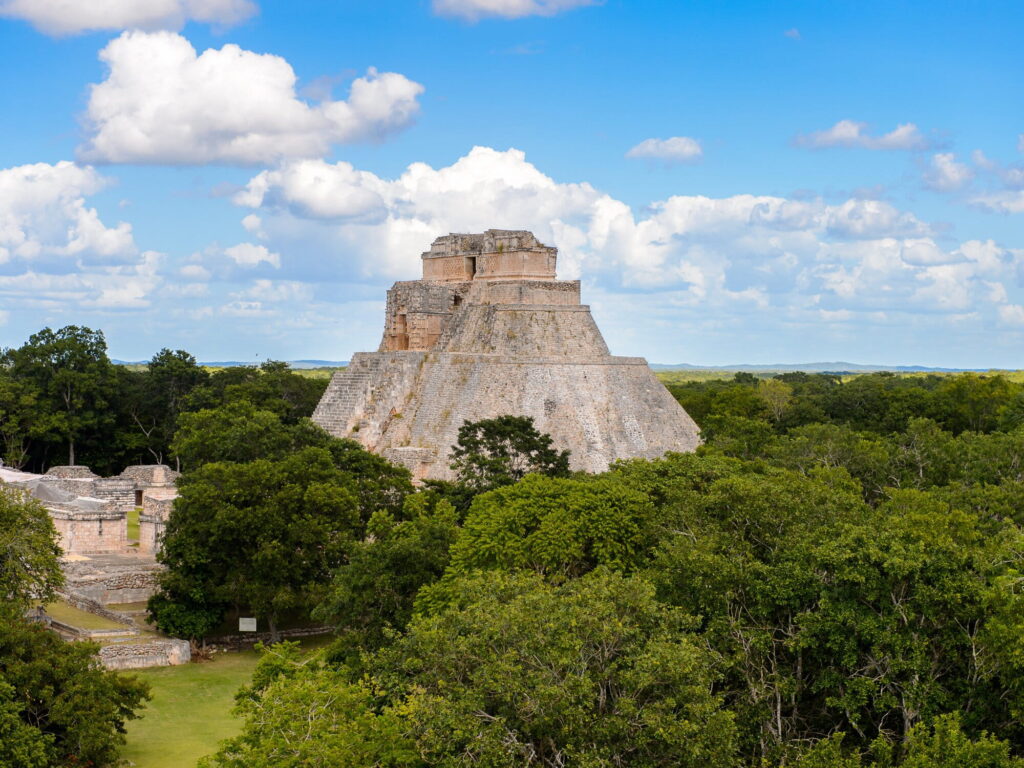
What we do know, however, are the stories of the ancient Aztecs, the great Maya civilization and the Inca Empire. We see them in documentaries, books, museums and films. Their impressive cities, temples and achievements have become part of our image of the ancient Americas.
And that can create a misleading impression: that these cultures belong entirely to the past.
But the history of the Maya, Inca and Aztecs did not simply end with the arrival of the Spanish. Their descendants are still here today. Their communities, traditions and languages have survived – although they have naturally changed over the centuries.
In other words, the people who speak these languages today are not living museum pieces. They are modern communities with their own experiences, identities and cultures.
Table of Contents
Indigenous Languages Are Far From Extinct
The sheer number of indigenous languages spoken around the world makes this especially clear. Indigenous languages are spoken on every continent, and Latin America alone is home to hundreds of them.
Globally, indigenous peoples make up a relatively small percentage of the world’s population, yet they speak a remarkably large proportion of the world’s languages. This is one reason why linguistic diversity and indigenous cultures are so closely connected.
For this article, I would like to introduce you to three language groups that you may already have heard of because of the famous civilizations associated with them:
- Quechua – associated particularly with the Inca Empire
- Maya languages – spoken throughout parts of Mexico and Central America
- Náhuatl – historically associated with the Aztec Empire and still spoken in Mexico today
And there is an important point to keep in mind: modern speakers are not simply speaking the exact same languages that were spoken hundreds or thousands of years ago. Languages change constantly. They develop new words, sounds and grammatical structures, and different varieties emerge in different regions.
Quechua
Quechua is probably best known internationally as the language associated with the Incas. But calling it simply “the Inca language” is a little misleading.
Quechua refers to a group of closely related languages and varieties spoken today across several countries in the Andes, including Peru, Bolivia, Ecuador, Colombia, Chile and Argentina. The language family has a long history that predates the Inca Empire, and Quechua was used extensively across the Inca realm.
As the empire expanded, Quechua varieties became important as a means of communication across large parts of the Andes. Today, Quechua remains one of the most widely spoken indigenous language groups in South America, with millions of speakers.
Linguists generally distinguish between major branches and varieties of Quechua. One commonly used classification divides them into Quechua I and Quechua II, with Quechua II further divided into IIa, IIb and IIc.
| Quechua group | Main area |
|---|---|
| Quechua I | Central Peru |
| Quechua IIa | Northern Peru |
| Quechua IIb | Ecuador, southern Colombia and northern Peru |
| Quechua IIc | Southern Peru, Bolivia and parts of Argentina and Chile |
The important thing here is that Quechua is not a single uniform language. Depending on the variety and region, speakers may find it easier or more difficult to understand one another.
So when we talk about “the language of the Incas”, we are really talking about a much more complex linguistic history.
Maya
The situation is similar with Maya languages. Maya is not the name of one single language. It refers to an entire language family containing numerous individual languages spoken in Mexico, Guatemala, Belize and neighbouring areas.
The Maya civilization itself covered a huge geographical area, and its history stretches back for thousands of years. The political centres and communities changed over time, but Maya peoples and languages did not disappear.
Today, millions of people speak Maya languages. Among the largest are K’iche’, spoken primarily in Guatemala, and Yucatec Maya, also known as Maaya t’aan, spoken mainly in Mexico and Belize.
And this is perhaps the most important thing to remember about the Maya civilization: the Maya are not only an archaeological subject. There are Maya communities living in the region today, speaking their languages and maintaining their identities.
When you visit the ruins of a Maya city, you are therefore not looking at the remains of a people who simply vanished. You are looking at the archaeological remains of societies whose descendants are still part of the region’s present-day population.
Náhuatl
Then there is Náhuatl, one of the best-known indigenous languages of Mexico. It is particularly associated with the Aztecs, although the historical and linguistic story is more complicated than simply calling Náhuatl “the Aztec language”.
The Aztec capital, Tenochtitlan, stood where Mexico City is located today, and Náhuatl was an important language in central Mexico. Different varieties of Náhuatl continue to be spoken today, primarily in central and eastern parts of Mexico.
Modern Náhuatl has millions of speakers, although the exact number depends on how speakers and linguistic varieties are counted. As with Quechua and the Maya languages, it is important not to think of it as one completely uniform language.
There are numerous regional varieties, and they are not necessarily mutually intelligible. This means that even within the broad category of Náhuatl, there is considerable linguistic diversity.
And here is a fun connection with languages you probably use yourself every day: Náhuatl has left its mark on English and other European languages.
When plants and foods from the Americas became known in Europe, their names were often borrowed along with the objects themselves.
| English | Náhuatl |
|---|---|
| avocado | āhuacatl |
| tomato | tomatl |
| chocolate | xocolātl |
| chilli | chilli |
| guacamole | āhuacamōlli |
So the next time you eat a tomato, avocado, chilli or piece of chocolate, you are indirectly encountering a little piece of this linguistic history.
So, Do the Maya, Inca and Aztecs Still Exist?
The short answer is: yes – but not in the way the question might suggest.
The ancient political structures known as the Inca Empire and Aztec Empire no longer exist. The great cities and political systems of the pre-Columbian Americas belong to history. But that does not mean that the people, cultures and languages associated with them disappeared.
Today, millions of people identify with indigenous communities throughout Latin America. They speak languages descended from or related to those used before the Spanish conquest, while at the same time living fully in the modern world.
That distinction matters. Indigenous cultures are living cultures, not historical exhibits. Languages change. Traditions change. Communities change. And yet identities, languages and cultural knowledge can continue across generations.
Perhaps this is the most interesting lesson of all. When we hear words like “Aztecs”, “Incas” or “Maya”, it is easy to imagine something that happened a very long time ago. But history and the present are not always as separate as we think.
The next time someone looks surprised when you say that you are learning an indigenous language, you can tell them that these languages are anything but extinct.
And maybe, when you sit down to eat some chocolate or guacamole, you’ll remember that a little piece of the linguistic history of the Americas has made its way into your everyday life, too.
Conclusion
The stories of the Maya, Inca and Aztecs are often presented as stories of ancient civilizations. But the people and languages connected to those civilizations did not simply disappear when the Spanish arrived. Their descendants continue to live throughout Latin America, and millions of people still speak indigenous languages today.
Quechua, Maya languages and Náhuatl are just three examples of an enormous linguistic diversity that is still alive. Learning about them can change the way we look at the history of the Americas – and perhaps also challenge the idea that indigenous cultures belong exclusively in the past.
So, are they extinct? No. Their history continues in the present.
Frequently Asked Questions About the Maya, Inca and Aztecs
Do the Maya still exist today?
Yes, the Maya still exist today. Millions of people in Mexico, Guatemala, Belize and surrounding regions identify as Maya, and numerous Maya languages are still spoken today. The ancient Maya civilization is therefore not the same thing as the modern Maya population. The political structures and city-states of the ancient world disappeared or changed over many centuries, but Maya communities, identities and languages survived.
Do the Inca still exist today?
The Inca Empire no longer exists, as the empire was conquered by the Spanish in the 16th century. However, the descendants of the populations that lived within the Inca Empire are still living throughout the Andes. Quechua languages continue to be spoken by millions of people in countries including Peru, Bolivia and Ecuador, and Andean communities maintain cultural traditions with roots that reach back well before the Spanish conquest.
Is Náhuatl still spoken today?
Yes, Náhuatl is still spoken in Mexico today. There are numerous regional varieties, and the number of speakers depends partly on how the different varieties are classified and counted. Náhuatl is therefore not simply a historical language associated with the Aztecs. It is a living group of languages used by contemporary communities, although its speakers face challenges including language shift and pressure from Spanish.
Is Quechua a single language?
Quechua is best understood as a group of related languages and varieties. Linguists distinguish different branches and regional varieties, and speakers of different varieties may not always understand each other easily. The term “Quechua” is therefore useful as a broad designation, but it can hide a considerable amount of linguistic diversity.
Why are indigenous languages important?
Indigenous languages are important because they carry much more than vocabulary and grammar. They can contain knowledge about local environments, history, traditions, social relationships and ways of understanding the world. When a language disappears, communities can lose an important means of transmitting cultural knowledge between generations. At the same time, many indigenous languages remain vibrant and continue to adapt to modern life.