Table of Contents
From the Peaks of the Andes to the Present Day
The Quechua language has one of the most remarkable stories in the Americas. Long associated with the Inca Empire, Quechua became an important means of communication across a vast Andean region and remains a living language centuries after the Spanish conquest. Today, millions of people speak varieties of Quechua across South America, particularly in Peru, Bolivia and Ecuador. Rather than existing only as a historical relic, Quechua continues to be used at home, in communities, in education, in cultural life and increasingly online. Its survival is especially striking given the centuries of colonial rule, discrimination and pressure to shift toward Spanish. When you hear Quechua spoken today, you are not simply hearing an ancient language preserved in time. You are hearing a modern language that has adapted to changing societies while retaining deep connections to Andean culture, identity and history.
One important point is that Quechua is a language family, rather than one completely uniform language. The different varieties developed across an enormous geographical area, from high mountain communities to valleys and urban centers. Depending on the region, speakers may use significantly different vocabulary, pronunciation and grammatical features. In some cases, varieties can be difficult for speakers from different regions to understand without prior exposure. This linguistic diversity reflects centuries of independent development and makes Quechua particularly fascinating for anyone interested in Indigenous languages.
Where Is Quechua Spoken?
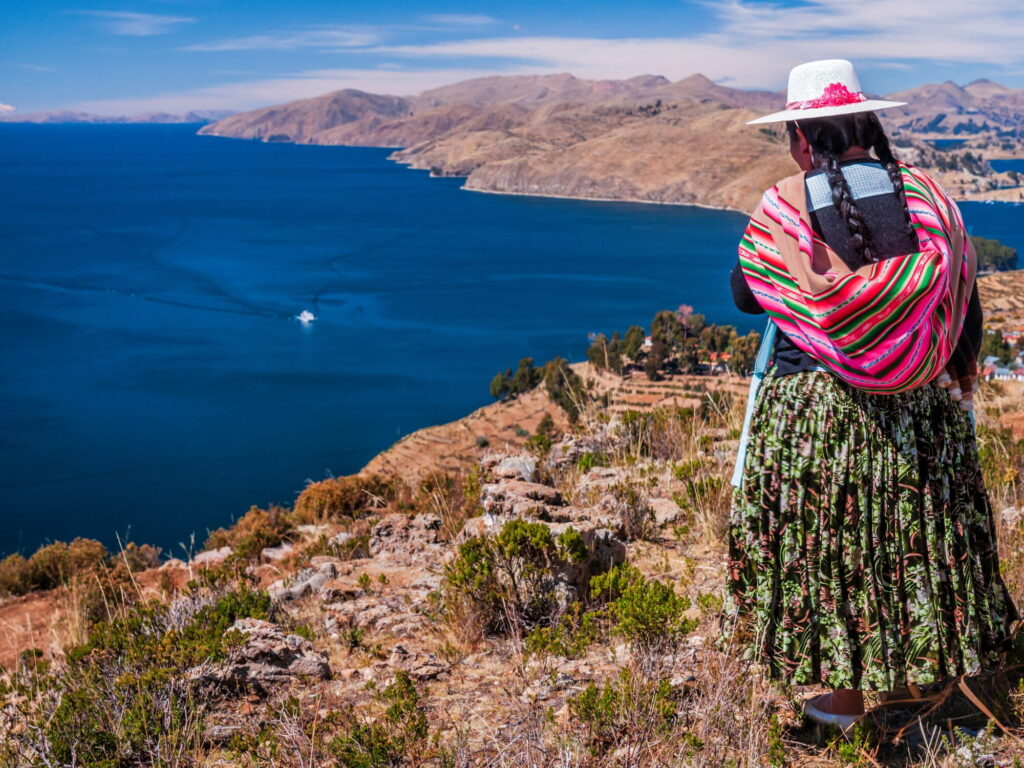
The Quechua-speaking world is centered in the Andes, with Peru generally regarded as the country with the largest Quechua-speaking population. Important Quechua-speaking regions include Cusco, Ayacucho, Apurímac, Huancavelica and other parts of the Peruvian highlands. Quechua is also widely spoken in Bolivia, while related varieties known collectively as Kichwa are spoken in Ecuador. Smaller Quechua-speaking communities can be found elsewhere in the Andes, including parts of Colombia, Chile and northwestern Argentina. The precise number of speakers is difficult to establish because censuses and surveys use different definitions and because speakers may identify with different varieties or use Quechua alongside Spanish.
The urban-rural divide also influences the language’s visibility. In many rural Andean communities, Quechua remains an important language of family and everyday communication. In larger cities, Spanish often dominates education, government, business and public life, which can create pressure on younger generations to use Spanish more frequently. At the same time, urban Quechua-speaking communities are helping to challenge the idea that the language belongs only in rural areas. Music, social media, education and cultural organizations are creating new spaces where Quechua can be heard and written.
The Structure of Quechua
For language learners, Quechua grammar offers a fascinating contrast with many European languages. Quechua is generally described as an agglutinative language, meaning that grammatical information is often expressed by attaching suffixes to a root. Instead of relying exclusively on separate words to express relationships such as direction, possession or grammatical function, Quechua can combine several pieces of information within a single word. This structure can initially feel unfamiliar if your first language is English, German, French or Spanish, but it becomes more logical once you understand how the suffixes work together.
Several features make Quechua linguistics particularly distinctive:
- Evidentiality: Many Quechua varieties distinguish how the speaker knows or obtained information, making the source of knowledge an important part of grammar.
- Three-vowel system: Many major Quechua varieties use three basic vowels, /a/, /i/ and /u/.
- No grammatical gender: Unlike Spanish, Quechua generally does not assign masculine and feminine grammatical genders to nouns.
These characteristics demonstrate why learning Quechua is much more than memorizing a collection of unusual words. The language offers a different way of organizing information and expressing relationships between people, actions and knowledge.
What Quechua Has Survived
The history of Quechua and Spanish colonization is complex. Following the Spanish conquest, Indigenous communities faced forced labor, religious conversion, political upheaval and social discrimination. At the same time, Spanish colonial authorities and missionaries sometimes used Quechua as a practical language for administration and evangelization. This helped certain varieties of Quechua maintain or even extend their reach in parts of the Andes, although this occurred within a deeply unequal colonial system.
During the following centuries, language discrimination became a major challenge. Spanish increasingly dominated formal education, government and economic life, while Quechua was frequently associated with rural poverty or Indigenous status. In some communities, children were discouraged or punished for speaking Indigenous languages at school. These experiences contributed to language shift, with some families choosing Spanish for their children in the hope of giving them greater educational or economic opportunities. The consequences are still visible today, particularly in communities where younger generations understand Quechua but use Spanish more often.
Useful Quechua Phrases
Learning a few basic Quechua phrases can be a great way to begin engaging with the language, although spelling and vocabulary can vary between regional varieties. For example, you may encounter expressions such as:
- Imaynallan kashanki? – How are you?
- Allillanmi. – I am fine.
- Añay. – Thank you.
- Tupananchiskama. – Goodbye / Until we meet again.
- Pitaq sutiyki? – What is your name?
- Sutiymi… – My name is…
The regional variation in Quechua is worth keeping in mind when learning these expressions. A phrase that is common in one variety may have a different form elsewhere, and spelling conventions can also differ between educational materials. If you want to learn the language seriously, it is therefore helpful to choose a particular variety and use resources designed specifically for that regional form rather than mixing examples from several dialects without context.
Want to hear what Quechua sounds like? In the following video you can listen to a native speaker:
The Return of Quechua
The modern history of Quechua revitalization is one of both challenges and renewed optimism. Governments, universities, cultural organizations and Indigenous communities have worked to increase the language’s presence in education and public life. Peru recognized Quechua as an official language alongside Spanish and other Indigenous languages, while Bolivia’s multilingual legal framework gives Quechua official status alongside Spanish and numerous other Indigenous languages. Ecuador has likewise recognized Kichwa within its multilingual national framework. These legal developments are important, although official recognition alone does not guarantee that a language will be used equally in everyday public life.
The digital Quechua revival is particularly interesting. Social media, YouTube, podcasts, online dictionaries and language-learning resources have created opportunities for speakers and learners to connect beyond their immediate communities. Younger Quechua speakers can now create music, videos, educational content and memes in the language and reach audiences far beyond the Andes. For many people, this represents a shift in perception: Quechua is not simply the language of an ancient empire. It is a contemporary language capable of adapting to smartphones, social media and modern popular culture.
Ready to Learn Quechua?
If you’re interested in learning Quechua, you have more options today than learners had just a few decades ago. Online courses, dictionaries, university resources, bilingual publications and community-led projects can help you get started. The most important first step is deciding which variety you want to study, because “Quechua” encompasses several closely related varieties rather than one completely standardized spoken form. Once you’ve chosen a variety, you can focus on its pronunciation, vocabulary and grammar without constantly switching between regional conventions.
Learning Quechua can also be a way of engaging with Andean culture and Indigenous language revitalization. But it is worth approaching the language as a living means of communication rather than simply as an artifact of the Inca Empire. Millions of people have their own contemporary relationships with Quechua, shaped by family, community, migration, identity and history. Even learning a few phrases can be meaningful when done respectfully and with an appreciation for that diversity. Whether your interest comes from travel, linguistics, family history or curiosity, Quechua offers an opportunity to discover a language whose story stretches from the pre-Columbian Andes into the digital world of today.
Conclusion
The story of Quechua today is ultimately a story of continuity and change. The language is deeply connected with the history of the Andes and the rise of the Inca Empire, but its importance does not end in the sixteenth century. Quechua survived colonialism, discrimination and generations of pressure toward Spanish, and it remains part of everyday life for millions of people. Its regional varieties reveal the enormous cultural and geographical diversity of the Andes, while new educational and digital initiatives are opening additional spaces for the language. If you encounter Quechua today, you’re encountering a living linguistic tradition, one that carries historical memory while continuing to evolve with the people who speak it.
Frequently Asked Questions About Quechua
Is Quechua the language of the Incas?
Quechua is strongly associated with the Inca Empire, and a variety of Quechua was used by the Inca state. However, Quechua did not originate with the Incas and was already spoken in the Andes before the empire expanded. The Incas adopted and promoted Quechua in their expanding realm, helping particular varieties become important languages of administration and communication. It is therefore more accurate to call Quechua a major language associated with the Inca world than to describe it as a language invented or created by the Incas.
How many people speak Quechua today?
Estimates of Quechua speakers vary because different sources use different definitions, census methods and boundaries between language varieties. The language family has several million speakers, concentrated primarily in Peru, Bolivia and Ecuador. Some estimates place the total number of speakers across the Quechua language family in the millions, making it one of the most widely spoken Indigenous language groups in the Americas. Exact figures should therefore be treated as estimates rather than a single definitive number.
Is Quechua one language or several languages?
The Quechua language family includes multiple regional varieties. Linguists sometimes classify these varieties as dialects and sometimes as distinct languages, depending on the classification system being used. Differences can occur in pronunciation, vocabulary and grammar, and mutual understanding is not equally easy between all varieties. For learners, this means that choosing a particular regional variety is often more useful than simply studying “Quechua” in the abstract.
Is Quechua difficult to learn?
The difficulty of learning Quechua depends heavily on your linguistic background and the variety you choose. Its agglutinative grammar and suffix system may initially seem unfamiliar to speakers of European languages. However, once you understand the underlying patterns, the grammar can become surprisingly systematic. Pronunciation can be relatively approachable for many learners because major varieties commonly use a three-vowel system. Consistent practice and good regional resources are more important than trying to memorize everything at once.
Where can you learn Quechua?
There are increasingly more Quechua learning resources available through universities, language projects, books, online courses, videos and community initiatives. Because varieties differ, look for materials that clearly identify the variety they teach, such as Southern Quechua or a particular Peruvian or Bolivian variety. This will help you avoid combining grammatical or vocabulary features from unrelated regional forms and give you a more consistent foundation as you learn.