Table of Contents
Discovering Nahuatl: A Language Still Alive
When people think about Nahuatl, they often picture the ancient Aztec world: magnificent temples, powerful rulers, elaborate ceremonies, and the great city of Tenochtitlan. But Nahuatl is far more than a language of the past. It is a living language spoken in Mexico today, with 1,651,958 speakers recorded in the 2020 Mexican census. The National Institute of Indigenous Languages (INALI) recognizes 30 linguistic variants of Nahuatl, reflecting the remarkable diversity that has developed across different communities and regions.
You may already know some Nahuatl words without realizing it. Words such as “chocolate,” “tomato,” and “avocado” entered European languages through the history of contact between Indigenous peoples and Europeans.
Nahuatl also preserves an extraordinary literary tradition. Poetry, often associated with the beautiful expression in xochitl in cuicatl, or “flower and song,” could explore love, death, nature, history, spirituality, and the uncertainty of human life. Music was equally important, accompanying ceremonies, celebrations, communal activities, and religious traditions. Learning about Nahuatl therefore opens a door not only to an ancient civilization but also to a living cultural tradition that continues today.
The Language of the Aztecs
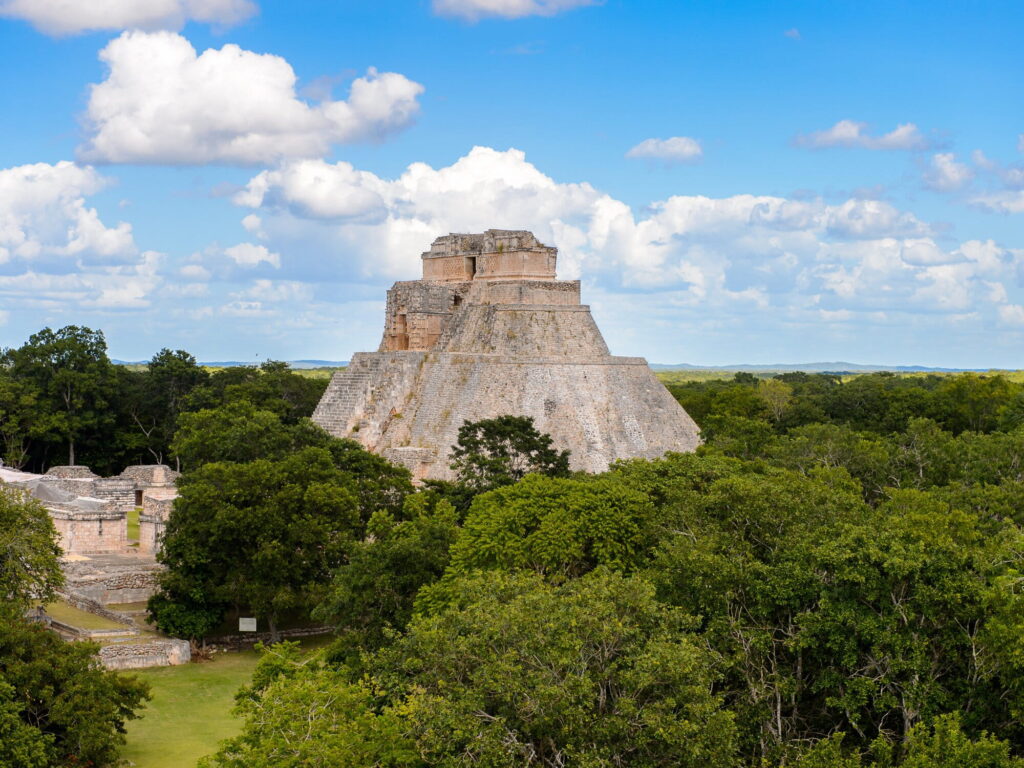
The phrase “language of the Aztecs” is commonly used to describe Nahuatl, but the historical picture is more complex. Nahuatl was spoken by the Mexica, the people commonly associated with the Aztec Empire, as well as by many other Nahua communities throughout central Mexico. It became an important language of communication across a large part of Mesoamerica and continued to be used after the Spanish conquest. This long history helps explain why Nahuatl has such a rich written and oral tradition.
One of the most fascinating aspects of Aztec language and culture is the importance of poetry and song. Nahuatl-speaking communities developed sophisticated forms of verbal art that could communicate philosophical and spiritual ideas as well as preserve cultural memory. Rather than viewing Nahuatl simply as an archaeological remnant of the Aztec Empire, it is more accurate to see it as a language with a long history that has continued to evolve. Modern Nahuatl communities are not simply preserving something frozen in the past; they are using their language in contemporary life.
Where Is Nahuatl Spoken Today?
Nahuatl is spoken in many parts of Mexico, although the number of speakers and the vitality of individual variants differ from region to region. INALI identifies historical Nahuatl-speaking areas in 16 Mexican states, including Puebla, Veracruz, Guerrero, Hidalgo, Morelos, Tlaxcala, San Luis Potosí, and the State of Mexico. Contemporary Nahuatl-speaking communities can therefore be found across a broad geographic area rather than in just one isolated region.
This regional diversity is one reason why talking about the Nahuatl language as though it were completely uniform can be misleading. INALI identifies 30 linguistic variants, and differences can appear in vocabulary, pronunciation, grammar, and spelling. Many speakers are bilingual in Nahuatl and Spanish, while the role of Nahuatl varies between communities. For anyone interested in learning the language, this is an important point: before choosing a course or textbook, it is worth checking which regional variety it teaches.
Understanding the Nahuatl Language
Nahuatl grammar has several characteristics that make it particularly interesting for language learners. It belongs to the Uto-Aztecan language family and has structures that can feel very different if your native language is English or another European language. Nahuatl can build complex words from smaller meaningful elements, allowing a single word to express information that might require several words in English. This type of word formation is one reason Nahuatl can initially look complicated to beginners.
Another well-known feature of Nahuatl pronunciation is the “tl” sound represented in many traditional spellings. The sound has become strongly associated with the language, although pronunciation can vary between regional varieties. Nahuatl also has its own vowel system and spelling traditions, and modern written forms can differ depending on the community or linguistic convention being used. Rather than assuming there is one universal pronunciation or spelling, learners should pay attention to the particular Nahuatl variety they are studying.
Want to hear what Nahuatl sounds like? In the following video you can listen to native speakers using the language and get a better feel for its pronunciation and rhythm.
The Decline of Nahuatl
The history of Nahuatl after the Spanish conquest is closely connected to major political and social changes in Mexico. Spanish gradually became dominant in government, education, commerce, and many other areas of public life. Over generations, Indigenous languages were often pushed into less formal settings, while Spanish became increasingly associated with education and economic opportunity.
This contributed to language shift in some communities. Indigenous language discrimination also played a role in discouraging some families from passing their languages to younger generations. The situation has never been identical everywhere, however. Some communities have maintained strong intergenerational transmission, while others have experienced much greater language loss. INALI notes that the vitality of individual Nahuatl variants differs considerably, ranging from variants at relatively low risk to others facing much higher levels of risk.
The Modern Revival of Nahuatl
Today, Nahuatl revitalization is taking place through the work of Indigenous speakers, educators, researchers, writers, cultural organizations, and communities. Efforts include documenting different variants, developing educational materials, supporting bilingual education, producing literature, and increasing the visibility of Nahuatl in contemporary media. INALI has specifically emphasized the importance of strengthening, transmitting, and revitalizing the different linguistic variants rather than treating Nahuatl as a single uniform language.
Modern technology is creating additional opportunities for learning Nahuatl online. Websites, digital resources, educational projects, recordings, and language-learning materials allow people outside traditional Nahuatl-speaking communities to discover the language. At the same time, digital tools can give existing speakers new ways to create and share content in their own language. This combination of community knowledge and modern technology could play an important role in ensuring that Nahuatl remains visible and useful in the future.
Some of the most important areas of Nahuatl revitalization include:
- Bilingual education: Teaching Indigenous languages alongside Spanish can support both language learning and cultural continuity.
- Digital resources: Websites, apps, recordings, and online learning materials make Nahuatl more accessible.
- Community initiatives: Local speakers and communities remain central to passing the language to younger generations.
- Literature and media: Books, radio, video, music, and online content create new spaces for Nahuatl.
- Language documentation: Dictionaries, grammars, recordings, and linguistic research help document the diversity of Nahuatl.
The Future of Nahuatl
The future of the Nahuatl language depends on more than simply counting how many people speak it. A language remains strong when people can use it naturally with family, friends, schools, communities, and increasingly in digital spaces. This is why language transmission is so important. If children and young adults continue learning and using Nahuatl, the language can remain an active part of everyday life rather than being limited to historical or ceremonial contexts.
There are real challenges, but there are also opportunities. Nahuatl language revitalization can benefit from growing interest in Indigenous history, language learning, digital publishing, education, and cultural heritage. At the same time, each Nahuatl-speaking community has its own circumstances and priorities. Supporting the language therefore means recognizing its regional diversity and giving speakers an active role in determining how their language is taught, written, documented, and used.
Ready to Learn Nahuatl?
Learning Nahuatl gives you the opportunity to explore a language with an extraordinary history while connecting with a living cultural tradition. You do not need to be a linguist or an expert in Aztec history to get started. A few everyday words and phrases can be enough to introduce you to the sounds and structure of the language and encourage you to explore further.
If you are interested in learning the language of the Aztecs, start with practical vocabulary, basic expressions, pronunciation, and listening practice. Remember that Nahuatl has multiple regional variants, so choosing appropriate learning materials matters. A resource designed for one community may not use exactly the same vocabulary or pronunciation as another. Taking the time to understand which variety you are learning will make your progress much more meaningful.
Have you already downloaded my FREE Nahuatl Cheat Sheet? It gives you an easy starting point with useful Nahuatl words and phrases, making it a great first step if you are curious about this fascinating language.
Conclusion: Nahuatl Is More Than an Ancient Language
Nahuatl is a living language, not simply a relic of the Aztec Empire. More than 1.65 million people were recorded as Nahuatl speakers in Mexico in the 2020 census, and INALI recognizes 30 linguistic variants. The language has survived centuries of enormous social and political change and continues to be spoken, taught, documented, written, and revitalized today.
Its story also reminds us that the language of the Aztecs is connected to much more than ancient temples and historical texts. Nahuatl carries literature, cultural knowledge, identity, and traditions that remain meaningful to communities in modern Mexico. Whether you are interested in Aztec history, Indigenous languages, linguistics, or simply want to learn something completely different, Nahuatl offers an extraordinary journey from the ancient world into the present day.
Frequently Asked Questions About Nahuatl
Is Nahuatl still spoken today?
Yes, Nahuatl is still spoken today by more than 1.65 million people in Mexico. According to INALI, the 2020 Mexican census recorded 1,651,958 Nahuatl speakers. The language also includes 30 recognized linguistic variants, so the way Nahuatl is spoken can differ considerably between communities.
Is Nahuatl the language of the Aztecs?
Nahuatl is commonly described as the language of the Aztecs, but the term is a simplification. It was spoken by the Mexica and many other Nahua peoples and has a much broader history than the Aztec Empire alone. Modern Nahuatl continues that linguistic history and is spoken by communities throughout several regions of Mexico.
How many people speak Nahuatl?
Around 1.5 million people speak Nahuatl in Mexico, according to the 2020 census figure published by INALI. The exact situation varies between the different linguistic variants, however. Some communities have strong language transmission, while other variants face significantly greater challenges.
Is Nahuatl difficult to learn?
Learning Nahuatl can be challenging but rewarding, particularly if you are accustomed to European languages such as English, Spanish, French, or German. Its grammar and word formation work differently from those languages. The existence of multiple regional variants is another factor to consider, so choosing learning materials for a specific variety can make the process much easier.
Where can I learn Nahuatl?
You can learn Nahuatl through online resources, books, courses, recordings, and educational projects. INALI itself provides language materials and information about different Nahuatl variants. If you are just starting, a practical vocabulary guide such as a Nahuatl cheat sheet can help you learn basic words and phrases before moving into pronunciation and grammar.