Table of Contents
An Indigenous Language at the Heart of a Country
Guaraní in Paraguay is much more than a language with a long history. It is part of everyday life for millions of people and remains closely connected to Paraguayan culture and identity.
Paraguay is unusual in South America because an indigenous language is widely spoken across the population, not only within specific indigenous communities. Guaraní is used in homes, communities, media, music, education, and public life.
The 2022 Paraguayan census showed just how important the language remains. Among people aged five and older, around 33.4% mainly used Guaraní at home, while another 34.4% used both Guaraní and Spanish.
This makes Guaraní and Spanish an important part of the country’s bilingual reality. Many Paraguayans move naturally between the two languages depending on the situation, the people they are talking to, and the subject of conversation.
Where Is Guaraní Spoken?
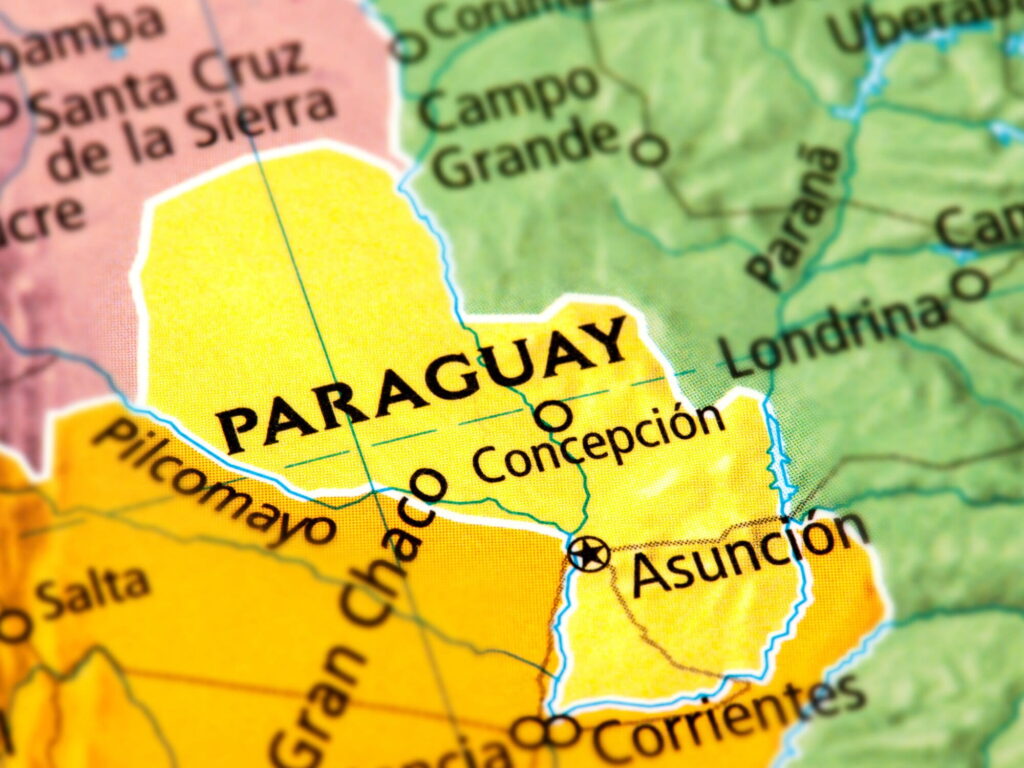
The Guaraní language is most strongly associated with Paraguay, where it has a particularly strong position in everyday communication. It is also spoken by communities in parts of Argentina, Bolivia, and Brazil.
Guaraní belongs to the Tupí-Guaraní language family, a large group of indigenous languages spoken across parts of South America. The languages in this family share historical connections, although they are not all mutually understandable.
In Paraguay, you will also encounter Jopara, a form of everyday speech that combines Guaraní and Spanish. The balance between the two languages can vary considerably from speaker to speaker.
For many people, bilingual communication is simply normal. A conversation may move between Guaraní and Spanish without either speaker thinking of it as something unusual.
What Makes Guaraní Linguistically Distinctive?
Guaraní has a few key features that make it noticeably different from English and Spanish. You do not need to know all the technical details to appreciate what makes the language special.
Here are four features that are particularly useful to know:
- Nasal sounds: Guaraní makes an important distinction between oral and nasal sounds. Nasalization can also affect neighboring sounds within a word.
- Agglutinative structure: Guaraní can build words by adding prefixes and other grammatical elements to a root, allowing a lot of information to be expressed within a single word.
- Inclusive and exclusive “we”: Guaraní distinguishes between “we” that includes the person being spoken to and “we” that does not. This distinction is built directly into the grammar.
- Nasal vowels in writing: Guaraní uses special letters and diacritics to represent nasal vowels, including ã, ẽ, ĩ, õ, ũ, and ỹ. These marks are an important part of the standard written language.
These features give Guaraní its own grammatical and sound system. At the same time, centuries of contact with Spanish have influenced the language. This interaction has helped create the distinctive bilingual environment found in modern Paraguay.
Guaraní and the Jesuit Missions
Guaraní and the Jesuit missions are closely connected in the written history of the language. During the colonial period, Jesuit missionaries learned Guaraní so they could communicate with local communities.
The missionaries produced religious and linguistic texts in Guaraní. They also created grammars and dictionaries that provide valuable historical evidence about the language.
The Jesuits were expelled from the Spanish territories in 1767. Their work therefore represents only one part of the much longer history of Guaraní.
It is important not to reduce the survival of the Guaraní language to missionary activity. The language continued because generations of speakers used it in their homes and communities. Its continued everyday use was essential to its survival.
Useful Guaraní Phrases
Everyday Guaraní phrases are a good way to get a first feel for the language. Even a few simple expressions can help you recognize its sound and rhythm.
- Mba’éichapa? – How are you?
- Iporãite. – I am very well.
- Aguyje. – Thank you.
- Jajotopáta. – Goodbye / Until we meet again.
- Mba’éichagua nde réra? – What is your name?
- Che réra… – My name is…
Pronunciation and accents are worth paying attention to when learning these phrases. The special letters used in Guaraní are not decorative; they can represent sounds that are important for understanding and pronouncing words correctly.
Want to hear what Guaraní sounds like? In the following video you can listen to a native speaker:
Guaraní in Modern Paraguay
The modern Guaraní language is firmly connected to contemporary Paraguayan society. You can encounter it in newspapers, radio, television, literature, music, education, and public communication.
Guaraní also has an important legal position. Paraguay’s 1992 Constitution established Guaraní and Spanish as the country’s official languages. The 2010 Language Law later provided a broader legal framework for the country’s language policy.
In everyday life, however, official status is only part of the story. Language use in Paraguay varies depending on region, family, age, education, and social context.
Some people use mainly Guaraní, others mainly Spanish, and many use both. This makes Paraguay’s linguistic landscape more varied than a simple division between two languages might suggest.
Guaraní in the Digital Age
The Guaraní language can be found online in a growing range of digital content, including websites, social media, educational resources, music, videos, and other forms of online communication.
Government institutions and language organizations have also developed digital resources to support the use, teaching, and documentation of Guaraní. For people who want to learn the language, this makes it easier to find written and audio material than it was in the past.
Guaraní is also used in modern communication alongside Spanish, reflecting the bilingual reality of everyday life in Paraguay. This does not mean that everything online is available in Guaraní or that the language has the same digital presence as Spanish or English.
However, Guaraní online gives speakers more opportunities to use the language in contemporary contexts. It also gives learners more ways to encounter Guaraní outside traditional books and classrooms.
Ready to Learn Guaraní?
Learning Guaraní can be a rewarding way to explore Paraguayan culture and everyday communication. You do not need to start by trying to master the entire grammar system.
A practical approach is to begin with common expressions, pronunciation, and simple sentence patterns. Once you become familiar with the sounds, some of the language’s grammatical structures become easier to recognize.
It also helps to remember that Guaraní is a living language. It is not simply a historical language preserved in books or museums. People continue to use it in conversations, families, communities, music, media, and online spaces.
That makes learning Guaraní a little different from studying a language only through historical material. You are learning a language that is still part of everyday life in Paraguay.
Conclusion
Guaraní and Paraguay are closely connected. The language has survived centuries of colonization, missionary activity, contact with Spanish, and political change while remaining part of everyday communication.
Today, Guaraní can be heard in homes and communities and found in media, education, music, literature, public life, and digital spaces. Its official status alongside Spanish also reflects its importance within Paraguayan society.
The census figures underline how widely the language is still used. At the same time, the different ways people combine Guaraní and Spanish show that language use in Paraguay is constantly evolving.
The story of Guaraní is therefore not only about the past. It is also about how an indigenous language continues to be spoken, written, taught, and adapted in the present.
Frequently Asked Questions About Guaraní
Is Guaraní an official language of Paraguay?
Guaraní and Spanish are the two official languages of Paraguay. This status was established by Article 140 of the country’s 1992 Constitution. The 2010 Language Law subsequently created a broader legal framework for language policy and the use of both official languages. In practice, the way people use Guaraní and Spanish varies considerably. Some Paraguayans mainly speak Guaraní, others mainly Spanish, while many use both languages regularly.
Is Guaraní difficult to learn?
Learning Guaraní can feel unfamiliar at first, especially if your main language is English, German, or Spanish. Its sounds and grammatical structures differ from those languages, and features such as nasalization and agglutination may take some getting used to. However, you do not need to understand the entire grammar system before you can start using the language. Learning common phrases and gradually becoming familiar with pronunciation and sentence patterns can give you a practical starting point.
Where can you learn Guaraní?
Guaraní learning resources are available in several forms, including books, dictionaries, websites, videos, audio material, and educational resources. Because the language is still widely spoken, learners can also find contemporary examples of Guaraní in music, media, and online communication. The availability of resources can vary, especially compared with widely taught languages such as Spanish or English. If you are starting from scratch, combining structured lessons with everyday examples can help you become familiar with both the written language and the way people actually use it.
Is Guaraní only spoken in Paraguay?
Guaraní is not limited to Paraguay. It is also spoken by communities in parts of Argentina, Bolivia, and Brazil. Paraguay is the country where the language has its strongest presence across the general population, but its wider history is connected to the larger Tupí-Guaraní language family found across South America. Different varieties and related languages exist in different regions, so the term “Guaraní” does not describe exactly the same form of speech everywhere. When people talk about Guaraní as an official language and a major part of national life, they are generally referring to its role in Paraguay.